
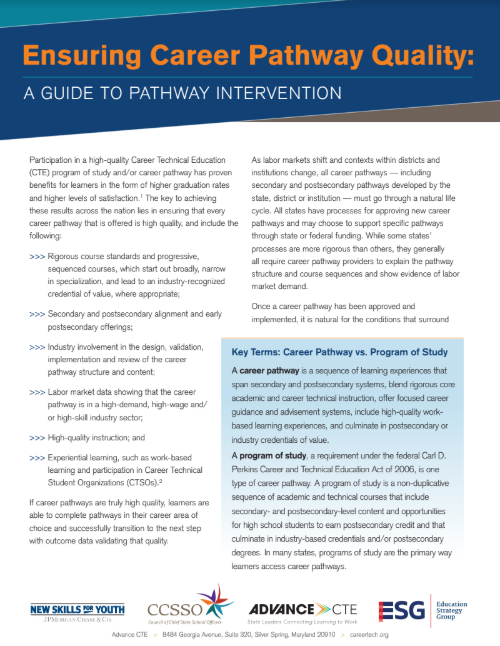
As labor markets shift and contexts within districts and institutions change, all career pathways — including secondary and postsecondary pathways developed by the state, district or institution — must go through a natural life cycle. Once a career pathway has been approved and implemented, it is natural for the conditions that surround and support the pathway to change over time. This guide from Advance CTE, as part of the New Skills for Youth initiative, outlines the different types of intervention needed for pathways, and explores the steps leaders should take when making decisions to transform or phase out pathways that do not have labor market relevance.




Career ClustersSystems Alignment
The modernization of the National Career Clusters® Framework (the Framework) creates new opportunities for improving and refining policy and practice to ensure…
